You've got a tree that needs to go. Maybe it's too close to the house, it's sick, or it's just in the way of that new garage you're planning. Whatever the reason, tree removal isn't a small job, and honestly, it's not something you want to mess up. Over the years, running Helena Tree Service, I've seen a lot of homeowners right here in our beautiful valley make some pretty common blunders when they're getting ready for a tree removal. Let's talk about how you can avoid them.
Mistake #1: Not Getting a Permit When You Need One
This is a big one, and it can land you in hot water fast. Not every tree removal needs a permit, but many do — especially if it's a large tree, a street tree, or if you're in a specific zoning district. I've had folks call me after they've already cut down a tree, only to find out they needed a permit from the city or county. Then they're looking at fines, or worse, being told they have to plant a replacement. It's a headache you absolutely don't need.
Before you even think about getting bids, make a quick call to the City of Helena's Planning Department or Lewis and Clark County's equivalent. Tell them what you're planning. They'll let you know if a permit is required and what the process is. It's usually pretty straightforward, but skipping it can be a real pain.
Mistake #2: Underestimating the Complexity (and Danger)
I get it, a chainsaw looks easy enough to operate. And maybe you've cut down a few small saplings in your life. But taking down a mature Ponderosa Pine or a big old Cottonwood, especially if it's near your house, power lines, or your neighbor's fence, is a whole different ballgame. It's incredibly dangerous work. We're talking about heavy equipment, falling limbs, high-tension wires, and unpredictable forces. One wrong cut, one miscalculation, and you could be looking at property damage, serious injury, or even worse.
I've seen homeowners try to DIY a big removal and end up with a tree through their roof, or worse, through their neighbor's roof. It's just not worth the risk to save a few bucks. Professionals have the training, the gear, and the insurance to do it safely. Don't let YouTube videos convince you otherwise, okay?
Mistake #3: Picking the Cheapest Bid Without Asking Questions
Everyone wants a good deal, and I respect that. But when it comes to something as critical as tree removal, the cheapest bid often comes with hidden costs or risks. If one bid is significantly lower than all the others, that's a huge red flag. It usually means they're cutting corners somewhere.
Here's what you need to ask, no matter the price:
- Are they insured? I'm talking about both liability insurance (for damage to your property or a neighbor's) and workers' compensation insurance (for their crew). Ask for proof, and don't just take their word for it. Call their insurance carrier to verify. If they're not properly insured, any accident on your property becomes your problem.
- Do they have references? A reputable company will be happy to provide them. Call a couple of past clients and ask about their experience.
- What's included in the price? Does it cover stump grinding? Debris removal? Hauling away all the wood? Make sure everything is spelled out clearly in writing.
- How long have they been in business? Experience matters, especially in a place like Helena where we deal with tough winters and sometimes tricky terrain, like those steep lots up on the West Side.
Don't be afraid to ask these questions. A good contractor will appreciate your thoroughness.
Mistake #4: Not Getting Everything in Writing
This goes hand-in-hand with the last point. A verbal agreement isn't worth the paper it's not written on. Get a detailed, written estimate or contract that outlines:
- The specific trees to be removed.
- The exact scope of work (e.g., removal, stump grinding, wood hauling).
- The total cost.
- Payment terms.
- Proof of insurance coverage.
- A timeline for completion.
This protects both you and the contractor. If there's a dispute later, you've got something to refer back to. It's just good business, and any professional company like Helena Tree Service will provide it without you even having to ask.
Mistake #5: Ignoring the Stump
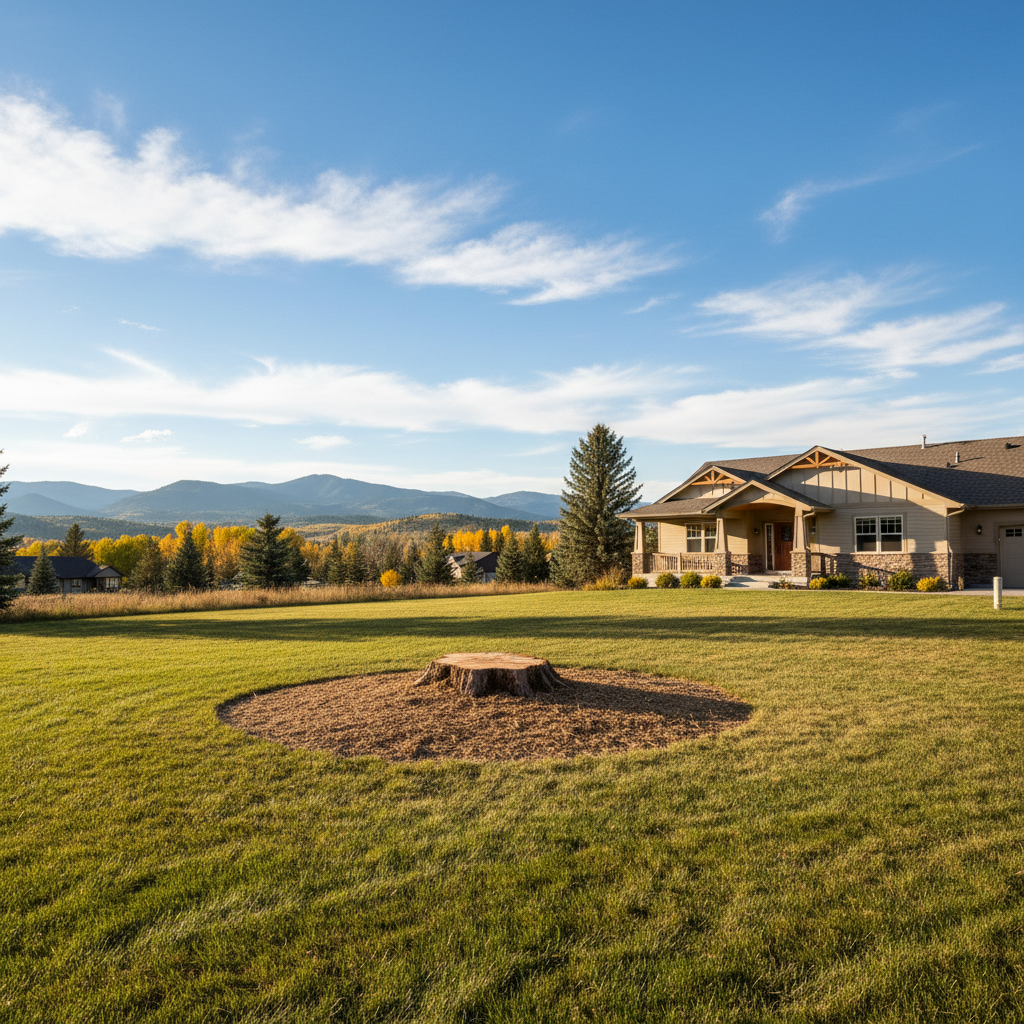
So, the tree's down. Great! But now you've got a stump. Some homeowners think they can just leave it, or that it'll rot away quickly. While it will eventually decay, it takes years, and in the meantime, it's an eyesore, a tripping hazard, and a potential home for pests like carpenter ants or termites that you definitely don't want near your house.
Make sure you discuss stump removal or grinding as part of the initial conversation. Most reputable companies offer it as an add-on or include it in their full removal service. It's usually worth the extra cost to get rid of it completely and reclaim that space in your yard.
Look, tree removal isn't rocket science, but it's definitely not a casual weekend project either. Taking a little time upfront to do your homework, ask the right questions, and choose a qualified, insured professional will save you a ton of headaches, money, and potential regret down the road. Stay safe out there, Helena!